Charles Dickens did not explain how Victorian society worked — he showed what happened when it didn’t. Through characters trapped by poverty, debt, bureaucracy and social convention, he turned the machinery of nineteenth-century Britain into human experience.
As a Victorian novelist, Dickens was more than an entertainer or moral commentator. He was a reporter in narrative form and a diagnostician of institutions. His novels exposed consequences rather than simply prescribing solutions, making him one of the most influential voices in nineteenth-century English literature.
Charles Dickens and the Machinery of Victorian Society
Born in Portsmouth in 1812, Dickens grew up during extraordinary economic and technological change. Industrialisation created wealth and opportunity while exposing deep divisions between those who benefited from progress and those caught beneath it.
His own childhood gave him intimate experience of that insecurity.
From the Blacking Factory to the Newsroom
When Dickens was twelve, his father was imprisoned for debt in the Marshalsea debtors’ prison. The young Dickens was sent to work at Warren’s Blacking Warehouse, pasting labels onto bottles.
The experience humiliated and deeply affected him. It also gave him first-hand knowledge of how quickly respectable family life could collapse under financial pressure.
Dickens later worked as a parliamentary reporter and journalist. His observational skills became central to his fiction: streets, offices, courts, schools and institutions were not merely backgrounds but functioning parts of the stories.
A Reporter in Narrative Form
Dickens understood that statistics alone rarely communicate suffering. Instead, he created people readers could remember.
As the author of Oliver Twist, he took readers inside the workhouse system. Little Dorrit examined imprisonment and debt. Bleak House attacked institutional paralysis through the Court of Chancery, while Hard Times questioned an educational philosophy that reduced children to containers for facts.
His Victorian social criticism therefore operated through consequences. Rather than presenting an abstract argument about a defective institution, Dickens showed what that institution could do to an individual.
His life and literary career are explored in greater detail in Encyclopaedia Britannica’s biography of Charles Dickens.
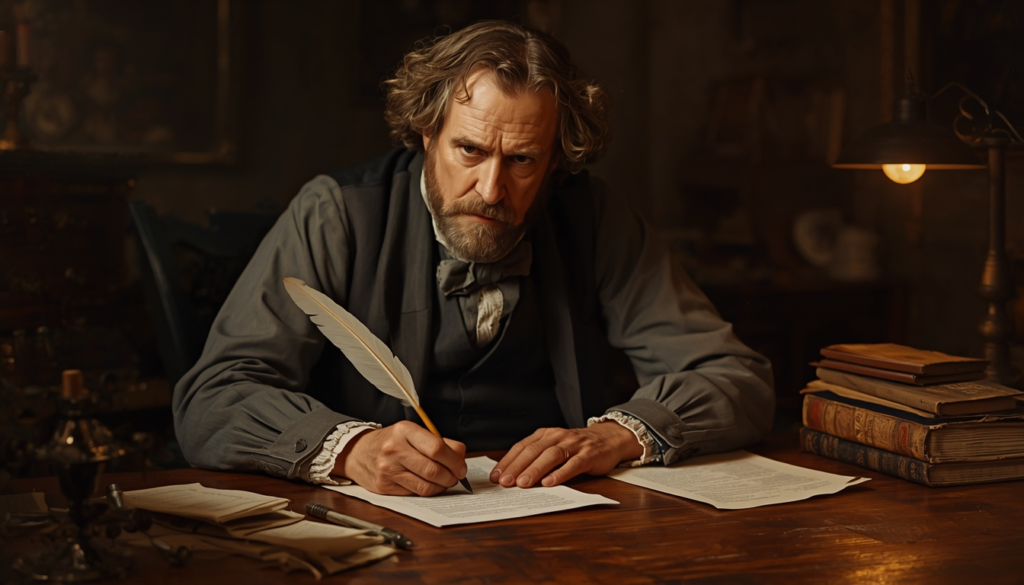
7 Powerful Insights Charles Dickens Revealed
Dickens’s novels repeatedly examined systems that promised order but often produced misery.
1. Poverty Was More Than a Personal Failure
Victorian attitudes could treat poverty as evidence of laziness or defective character. Dickens complicated that comfortable assumption by showing how employment, housing, illness, family circumstances and institutional decisions could trap people.
2. Debt Could Become a System of Imprisonment
Debt appears repeatedly in Dickens because he knew its consequences personally. The debtor could lose not only money but independence, reputation and family stability.
3. Workhouses Could Dehumanise the Vulnerable
Oliver Twist transformed the workhouse into one of literature’s enduring symbols of institutional cruelty. Dickens showed how a system supposedly designed to relieve poverty could punish people for being poor.
4. Education Could Fail Children
In Hard Times, Dickens attacked an educational mentality obsessed with measurable facts while neglecting imagination, individuality and emotional development.
His concern belongs within the broader transformations explored in Victorian Science and Society, when industrialisation, education and scientific thinking were reshaping everyday life.
5. Bureaucracy Could Become Its Own Purpose
Few writers portrayed bureaucracy as effectively as Dickens. His fictional institutions accumulate paperwork, procedures and officials until the original human problem almost disappears.
6. Children Paid for Adult Systems
From Oliver Twist to David Copperfield, children repeatedly suffer because of decisions made by adults and institutions. Dickens understood that child labour and deprivation were not isolated tragedies but symptoms of wider economic structures.
7. Progress Had a Human Cost
Victorian Britain celebrated engineering, science and industry. Figures such as James Clerk Maxwell represented extraordinary advances in understanding the physical world, while Mary Somerville helped communicate an increasingly interconnected scientific landscape.
Dickens examined another side of that progress: what happened to people who were overlooked by it.
Charles Dickens as a Victorian Diagnostician
Dickens belongs naturally within the intellectual landscape surrounding the Ada Lovelace Victorian knowledge. Lovelace considered what machines might eventually accomplish; scientists investigated the laws governing nature; Dickens investigated the systems governing people.
Showing What Happened When Society Failed
Dickens was not a systematic political theorist, and reducing him to a campaigner misses much of his significance. His greatest strength was diagnosis.
He made institutional failure visible.
A workhouse became Oliver’s hunger. Debt became Mr Micawber’s instability. Bureaucratic paralysis became the endless case of Jarndyce and Jarndyce. Educational rigidity became Thomas Gradgrind’s world of facts.
That is why Dickens remains relevant. His fiction asks a deceptively simple question: when an institution appears efficient on paper, what does it actually do to the people who encounter it?
Frequently Asked Questions
Conclusion
Charles Dickens gave that contradiction faces, names and stories. He did not need to explain how Victorian society worked. By showing what happened when its institutions failed, he made its weaknesses impossible to ignore.
“The hardest truth for a child to learn is that their teacher doesn’t know everything.”
– Stephenism
🎵 Soul from the Solo Blogger — Tunes from Túrail.