19th-Century Science transformed humanity’s understanding of nature and established many of the principles upon which modern technology depends. During a century of extraordinary intellectual and industrial change, scientists uncovered relationships between electricity and magnetism, developed evolutionary theory, transformed medicine and created new approaches to mathematics and mechanical computation.
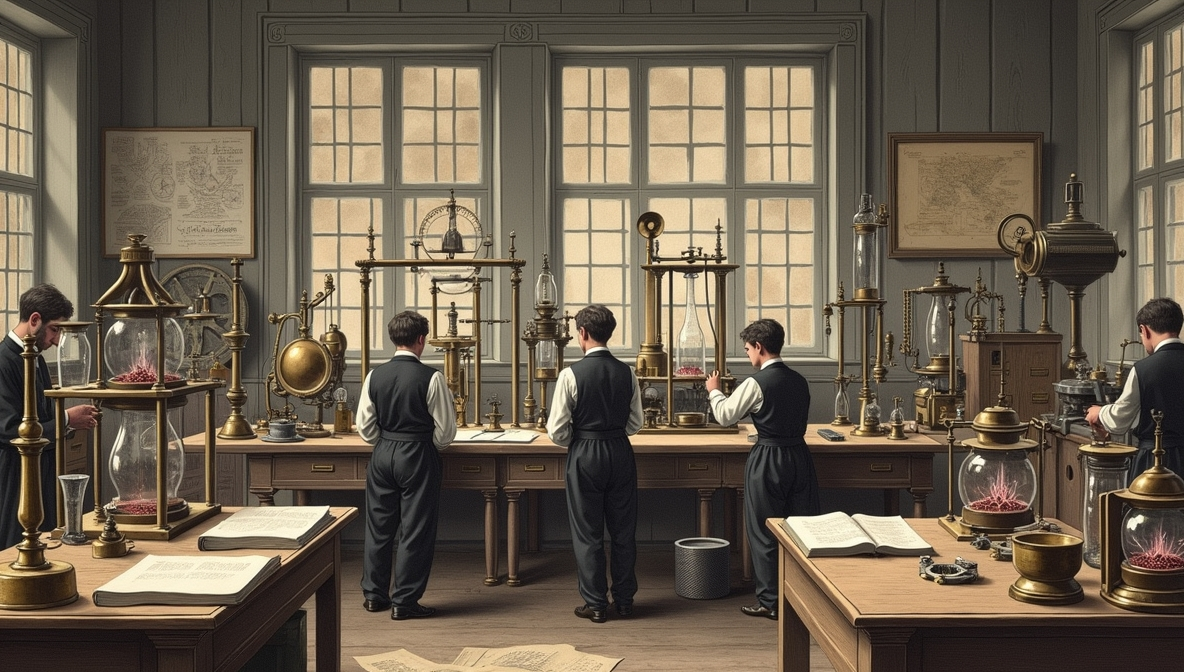
Science itself was changing. Research became increasingly systematic and professional, while universities, scientific societies and specialist journals helped discoveries circulate more rapidly. At the same time, industrialisation created practical demand for better materials, machines, communications and sources of power.
The result was a remarkable interaction between scientific discovery and technological innovation that reshaped everyday life.
19th-Century Science and the Rise of Modern Scientific Thought
Scientific investigation certainly did not begin in the nineteenth century. The Scientific Revolution of earlier centuries had already established experimentation, observation and mathematical reasoning as powerful methods for investigating nature.
During the nineteenth century, however, these methods became increasingly institutionalised.
Scientific societies expanded, laboratories became more important and disciplines developed their own professional communities. The word scientist itself came into use during the century, reflecting a changing understanding of scientific work.
This development of modern scientific thought encouraged researchers to measure phenomena carefully, test explanations and search for mathematical relationships underlying the physical world.
Electricity, Magnetism and Physics
Michael Faraday became one of the century’s most important experimental scientists. His work on electromagnetic induction demonstrated that changing magnetic fields could produce electrical currents — a principle fundamental to electric generators and transformers.
James Clerk Maxwell later expressed relationships between electricity and magnetism mathematically. Maxwell’s equations showed that electricity, magnetism and light were interconnected electromagnetic phenomena.
These discoveries eventually contributed to electric power systems, radio, telecommunications and much of the electronic technology that followed.
Physics also underwent profound changes through the development of thermodynamics. Scientists including James Prescott Joule, Rudolf Clausius and William Thomson, later Lord Kelvin, helped establish relationships between heat, energy and mechanical work.
These were among the scientific discoveries of the nineteenth century that changed both theoretical science and practical engineering.
Discovery, Industry and Victorian Scientific Innovation
Biology was transformed just as dramatically.
Charles Darwin’s On the Origin of Species, published in 1859, proposed evolution through natural selection. The theory provided a mechanism explaining how populations could change over generations and challenged established assumptions about the history and diversity of life.
Medicine also advanced considerably. Louis Pasteur’s research supported germ theory, while Joseph Lister applied antiseptic principles to surgery. Their work helped establish that microorganisms could cause disease and that controlling infection could dramatically improve medical outcomes.
Chemistry became increasingly systematic. John Dalton developed modern atomic theory early in the century, while Dmitri Mendeleev’s periodic table revealed patterns among the chemical elements and even allowed scientists to predict properties of elements not yet discovered.
Science Meets the Industrial Revolution
Scientific discovery was closely connected with industrial development. Steam power, railways, telegraphy and improved manufacturing changed how people travelled, communicated and worked.
This relationship between discovery and industry became a defining characteristic of Victorian science and society.
Telegraph systems allowed messages to travel across great distances almost instantaneously. Railway networks transformed transportation, while improvements in metallurgy made larger machines, bridges and ships possible.
Such Victorian scientific innovation also had significant social consequences. Industrial cities grew rapidly, generating wealth and employment while simultaneously creating overcrowding, pollution and poor working conditions.
The nineteenth century therefore demonstrated something that remains familiar today: technological progress can solve problems while creating entirely new ones.
From Mechanical Calculation to Modern Computing
Among the most intriguing developments of the century were attempts to mechanise calculation.
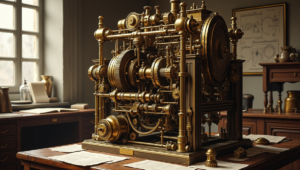
Charles Babbage designed his Difference Engine to automate the production of mathematical tables. The machine was intended to reduce errors caused by manual calculation and transcription.
Babbage subsequently conceived something far more ambitious: the Analytical Engine.
Unlike the Difference Engine, which was designed for a particular type of calculation, the Analytical Engine was conceived as a general-purpose programmable machine. Its proposed architecture included a store for information, a mill for performing operations and punched cards for supplying instructions and data.
Ada Lovelace recognised the deeper implications of Babbage’s design. She understood that a programmable machine could potentially manipulate representations according to rules rather than merely calculate numerical quantities.
That insight connects nineteenth-century mechanical computation with modern symbolic processing, in which computers manipulate expressions, relationships and abstract representations.
Lovelace’s notes also occupy an important position in the early history of programming. Her description of a method for calculating Bernoulli numbers using the Analytical Engine is frequently regarded as the first published computer program.
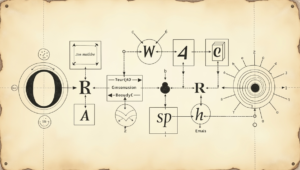
These developments depended upon a wider intellectual tradition involving mathematics and formal reasoning. The relationship between logic and algorithms would become increasingly important as mechanical calculation eventually gave way to electronic computing.
The achievements of nineteenth-century scientists and inventors therefore extended far beyond the machines they could actually construct. In some cases, their ideas anticipated technologies that would not become practical for another century.
A broader overview of the period can be found in this account of the 19th century in science.
Frequently Asked Questions
Conclusion
19th-Century Science ultimately changed both what humanity knew and how knowledge was created. Increasingly rigorous experimentation, mathematical analysis and professional scientific institutions established practices that remain central to research today. From electromagnetism and evolution to germ theory and programmable machines, the nineteenth century provided intellectual foundations upon which much of the modern scientific and technological world was built.
“Systems don’t reward defiance; they reward understanding.”
Stephenism
🎵 Soul from the Solo Blogger — Tunes from Túrail.