Women in Science and Technology
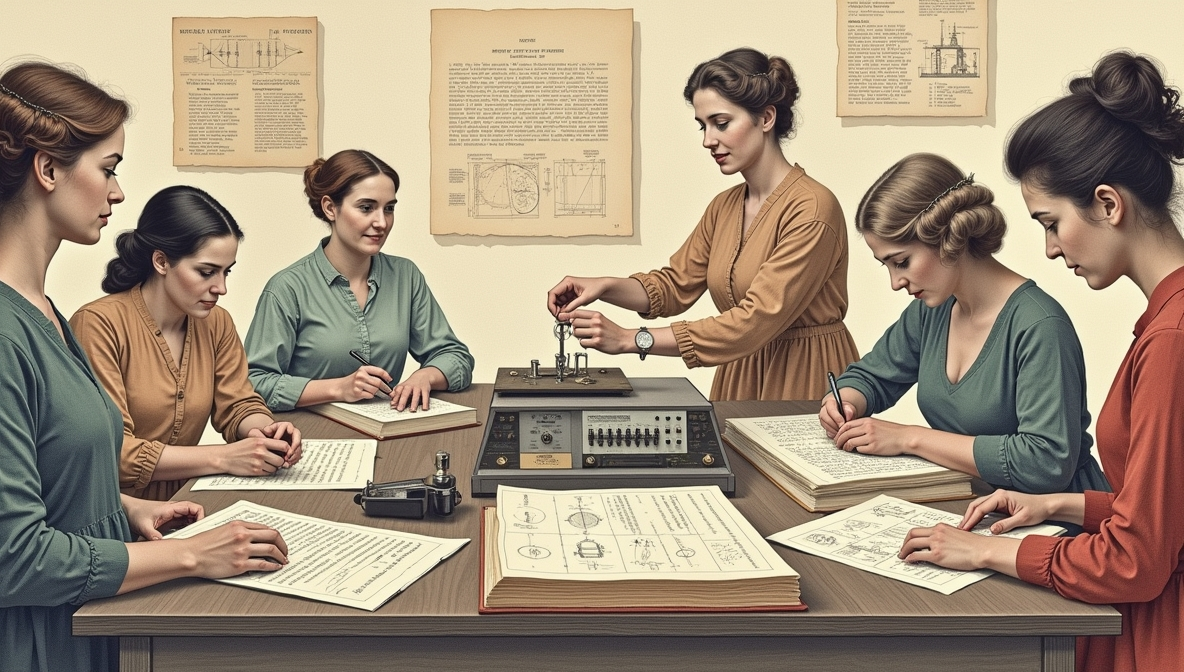
Women in Science and Technology explores the achievements of pioneering women whose discoveries, ideas and inventions have helped shape our understanding of the world. For centuries, women contributed to mathematics, astronomy, medicine, engineering and computing, often while facing educational and professional barriers that prevented them from receiving the recognition available to their male contemporaries.
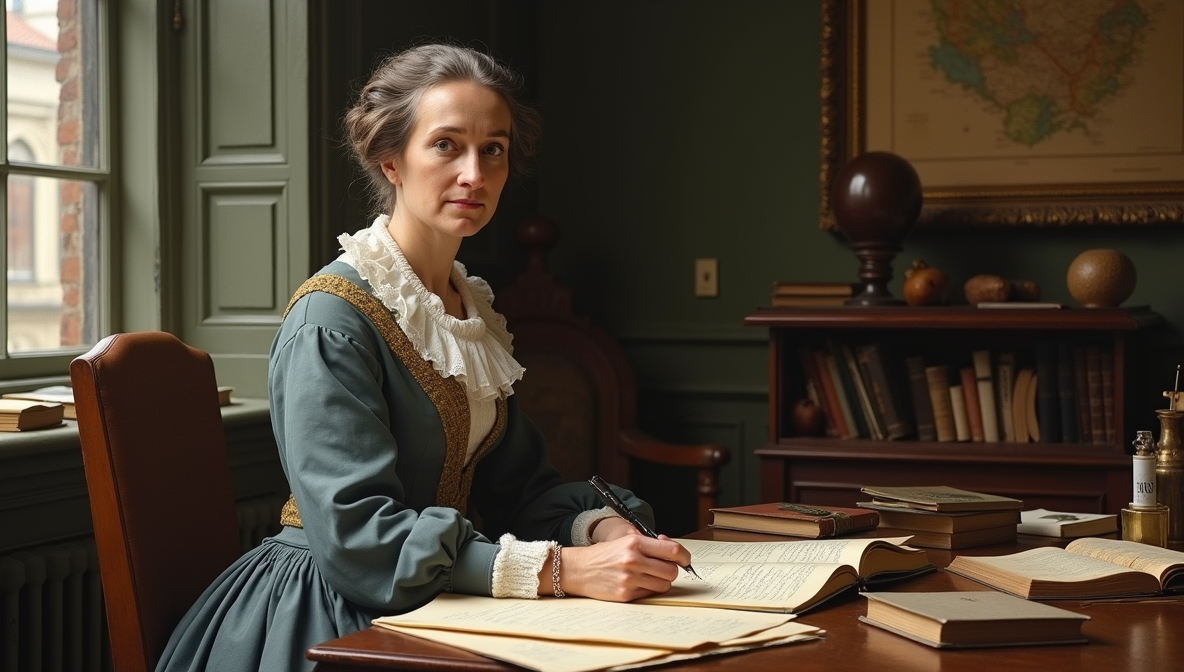
Some of the earliest influential figures combined scientific ability with a determination to pursue knowledge despite these restrictions. Mary Somerville became one of the nineteenth century’s most respected scientific writers and mathematicians, helping explain complex developments in astronomy and physics to a wider audience. Her achievements were so significant that Somerville College at Oxford was later named in her honour.
Ada Lovelace occupies an equally important position in the history of computing. Working with Charles Babbage’s proposed Analytical Engine, she recognised that a programmable machine could potentially manipulate symbols and information rather than simply calculate numbers. Her description of an algorithm for the machine has led to her widespread recognition as an early pioneer of computer programming.
The history of Women in Science and Technology extends far beyond the Victorian period. Marie Curie’s pioneering research into radioactivity earned her Nobel Prizes in both Physics and Chemistry, while mathematician Emmy Noether made fundamental contributions to abstract algebra and theoretical physics.
Breaking Barriers and Changing Science
During the twentieth century, women became increasingly important to rapidly developing scientific and technological fields. Grace Hopper helped advance computer programming and compiler development, while Katherine Johnson’s mathematical calculations contributed to NASA’s early human spaceflight programmes. Rosalind Franklin’s work with X-ray diffraction also provided crucial evidence for understanding the structure of DNA.
The story of Women in Science and Technology is therefore not simply about overcoming inequality. It is also about scientific excellence, intellectual curiosity and discoveries that changed entire fields of knowledge.
This Walkeropedia category brings together biographies and stories celebrating Women in Science and Technology, examining their achievements, the obstacles they encountered and their lasting influence. Their contributions demonstrate that the history of scientific progress becomes far richer when the people whose work was once overlooked are restored to their rightful place within it.
Mary Somerville was a quiet architect of modern scientific thinking, translating complex mathematics into ideas that connected astronomy, physics, and philosophy. Working outside formal institutions, she helped shape Victorian science into a coherent intellectual system and left a legacy that influenced figures from Babbage to Lovelace.
Women in Science and Technology History examines how women have contributed to scientific knowledge, technological development, and mathematical understanding across centuries, often working through mentorship, collaboration, and informal networks. By placing these contributions within their social and institutional contexts, the article reveals how opportunity and recognition have shaped the scientific record as much as discovery itself.