Is HTML a programming language? No. HTML is a markup language that describes the structure and meaning of webpage content. It tells a browser which text is a heading, which content forms a paragraph and where links or images belong. It does not independently execute the instructions normally associated with a programming language.
That distinction can be confusing for beginners because HTML is written as code and is essential to web development. Understanding what it does—and what it leaves to other technologies—makes learning to build websites much easier.
What HTML Actually Does
HTML stands for HyperText Markup Language. Its purpose is to organise content into meaningful elements that browsers can interpret and display.
The word hypertext refers to text containing links that connect documents or resources. Our guide to the meaning of hypertext explains this foundational web concept.
HTML Gives Content Structure
A browser reads HTML to identify headings, paragraphs, lists, images and other components of a document.
Headings and Paragraphs
A heading element identifies a title or section heading, while a paragraph element marks ordinary text. These distinctions help browsers, search engines and assistive technologies understand the content.
Links and Images
Anchor elements create hyperlinks, while image elements identify visual resources. These are instructions about document structure, not commands to perform general-purpose calculations.
For a broader introduction, explore HyperText Markup Language.
Is HTML a programming language?
The key to answering the question lies in understanding the differences between markup languages and programming languages.
Markup describes content and its relationships. Programming expresses operations that a computer can carry out, often using variables, calculations, conditions and repetition.
A Simple Comparison
HTML Describes Information
Consider this example:
<h1>Welcome</h1>
<p>This is my first webpage.</p>
The browser recognises a heading and a paragraph. HTML identifies what those pieces of content are; it does not calculate a result or decide between alternative actions.
JavaScript Performs Operations
JavaScript can calculate a total, respond to a button click or choose what happens when a condition is met.
HTML and JavaScript therefore have different responsibilities, even when they appear together in the same webpage.
The distinction is also explained in this GeeksforGeeks guide to why HTML is not a programming language.
Why HTML Cannot Perform Calculations or Conditional Logic
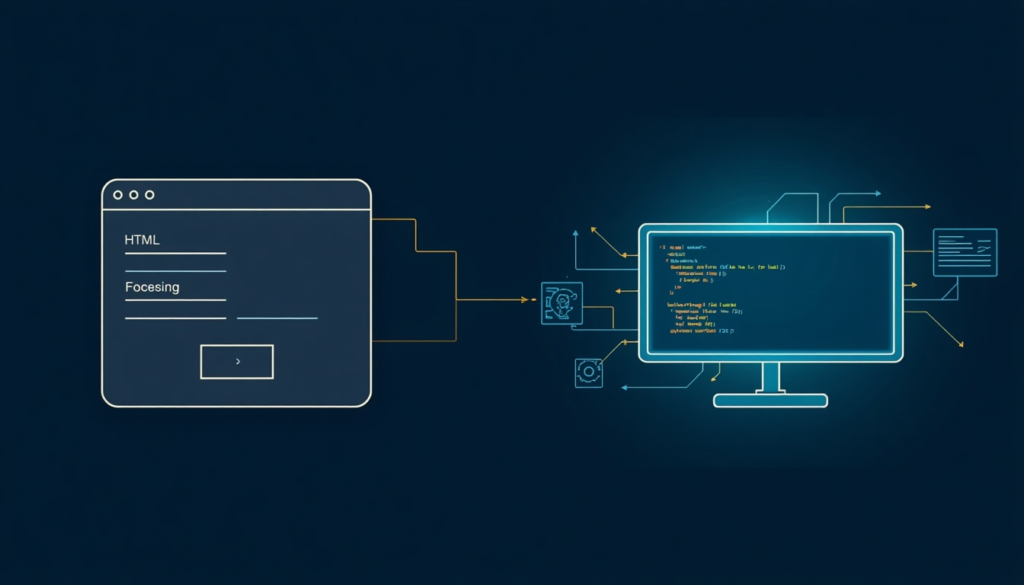
HTML can describe a form containing numbers, but it cannot independently add those numbers together or decide what to do with the result.
This illustrates why HTML cannot perform calculations or conditional logic on its own.
What Happens When a Webpage Needs Logic?
Suppose a shopping website needs to calculate the total price of several products.
HTML can provide the input fields and display an area for the total. JavaScript can read the entered values, perform the calculation and update the result.
Conditional Decisions
A programming language can evaluate a condition, such as whether a customer qualifies for a discount, and execute different instructions accordingly.
HTML has no general-purpose conditional statements equivalent to JavaScript’s if statement.
Repeating Operations
Programming languages can also use loops to repeat operations. HTML has no general-purpose looping mechanism for repeatedly executing instructions.
A developer could manually write ten identical HTML elements, but that would not constitute a programmatic loop.
How HTML Works with CSS and JavaScript
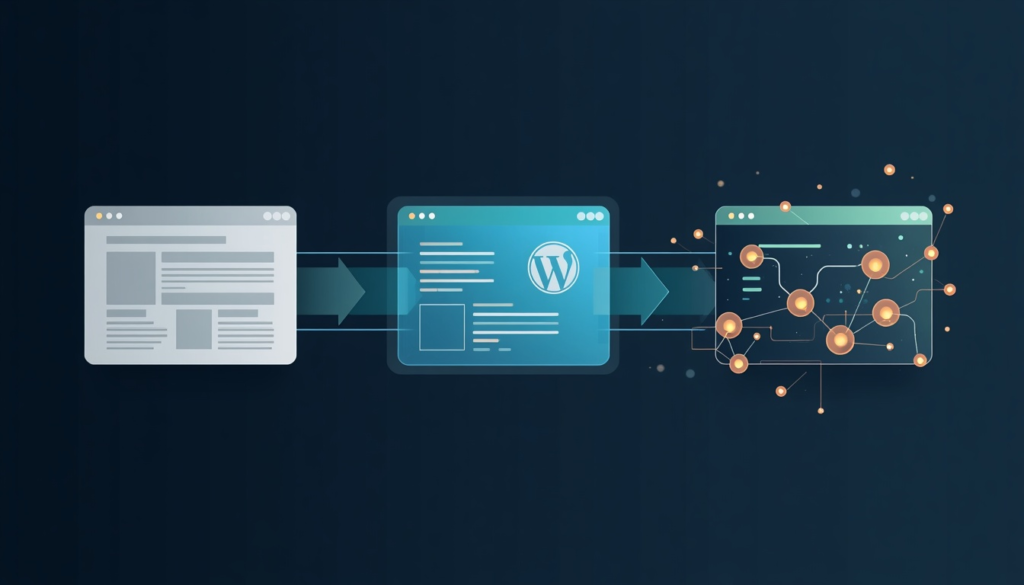
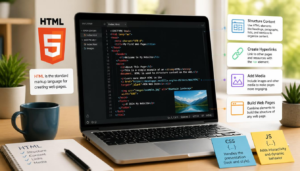
Modern websites usually combine three technologies, each with a distinct responsibility.
- HTML: Defines the structure and meaning of content.
- CSS: Controls presentation, including colours, typography and layout.
- JavaScript: Adds programmable behaviour and interaction.
This division explains how HTML works with JavaScript to create interactive webpages.
For example, a webpage might contain an HTML button styled with CSS. JavaScript can respond when a visitor clicks it, revealing additional information without requiring a new page.
Our article on JavaScript and HTML explores this relationship in greater detail.
HTML can also provide built-in interactive features, including hyperlinks, forms and disclosure elements. However, these features do not make HTML a general-purpose programming language.
Why HTML Is Still Essential to Web Development
Calling HTML a markup language does not diminish its importance.
Without a meaningful document structure, websites would be considerably harder to navigate, maintain and interpret.
HTML provides the foundation on which styling and interactive behaviour are built. Its semantic elements help identify navigation areas, articles, headings and other components.
Learning HTML first also makes CSS and JavaScript easier to understand because developers can identify the elements they want to style or manipulate.
Our guide to HTML document structure demonstrates how these elements fit together to create a complete webpage.
The phrase HTML as a markup language for structuring web content captures its essential purpose: organising information so that browsers and other technologies can understand it.
Conclusion
The answer to is HTML a programming language is no, but HTML remains indispensable to web development. It describes content, CSS controls its appearance and JavaScript provides programmable behaviour. Understanding these separate roles gives beginners a clearer foundation for learning how websites work.