Victorian Science and Society
Victorian Science and Society explores an extraordinary period when scientific discovery, technological innovation and social change transformed Britain and influenced the wider world. During the reign of Queen Victoria, traditional ideas about nature, industry, medicine and humanity itself were increasingly challenged by new evidence and new ways of thinking.
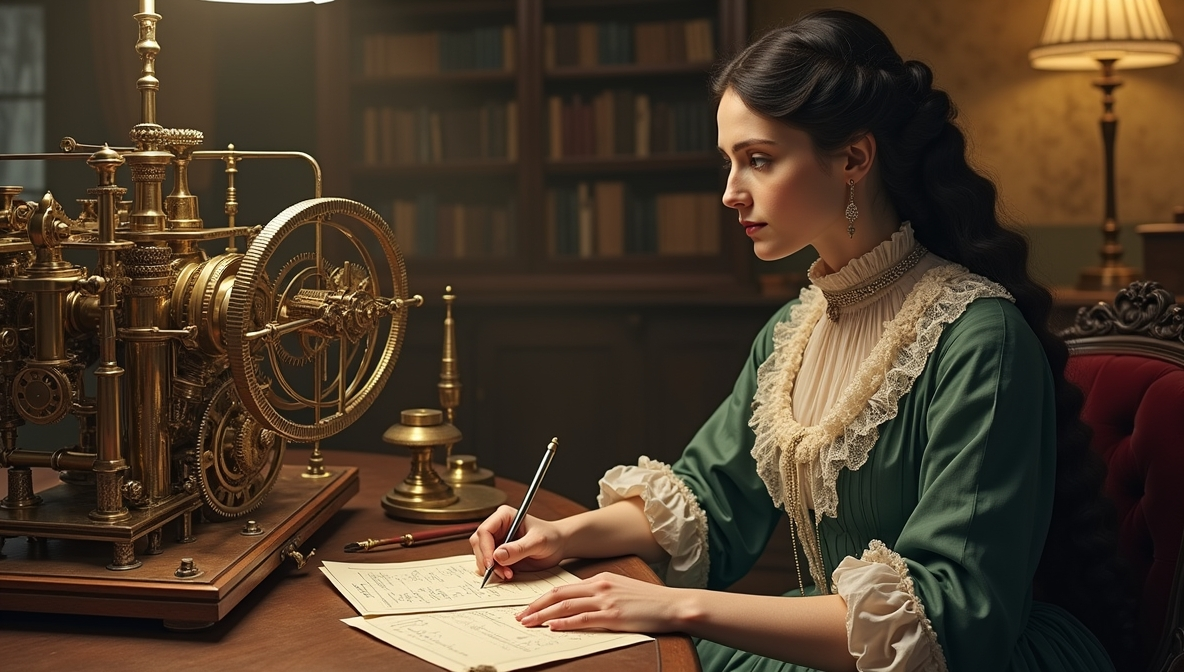
The nineteenth century produced some of Britain’s most influential scientists and thinkers. Figures such as Charles Darwin reshaped understanding of evolution, while Michael Faraday transformed knowledge of electricity and magnetism. James Clerk Maxwell provided the mathematical foundations for electromagnetic theory, and pioneers including Charles Babbage and Ada Lovelace anticipated concepts that would eventually become central to modern computing.
Yet Victorian Science and Society is about more than famous discoveries. Scientific progress developed alongside the Industrial Revolution, rapid urbanisation, expanding railways and telegraph networks, improvements in public health and major changes in education. Science increasingly affected everyday life, while Victorian society influenced which problems scientists investigated and how their discoveries were received.
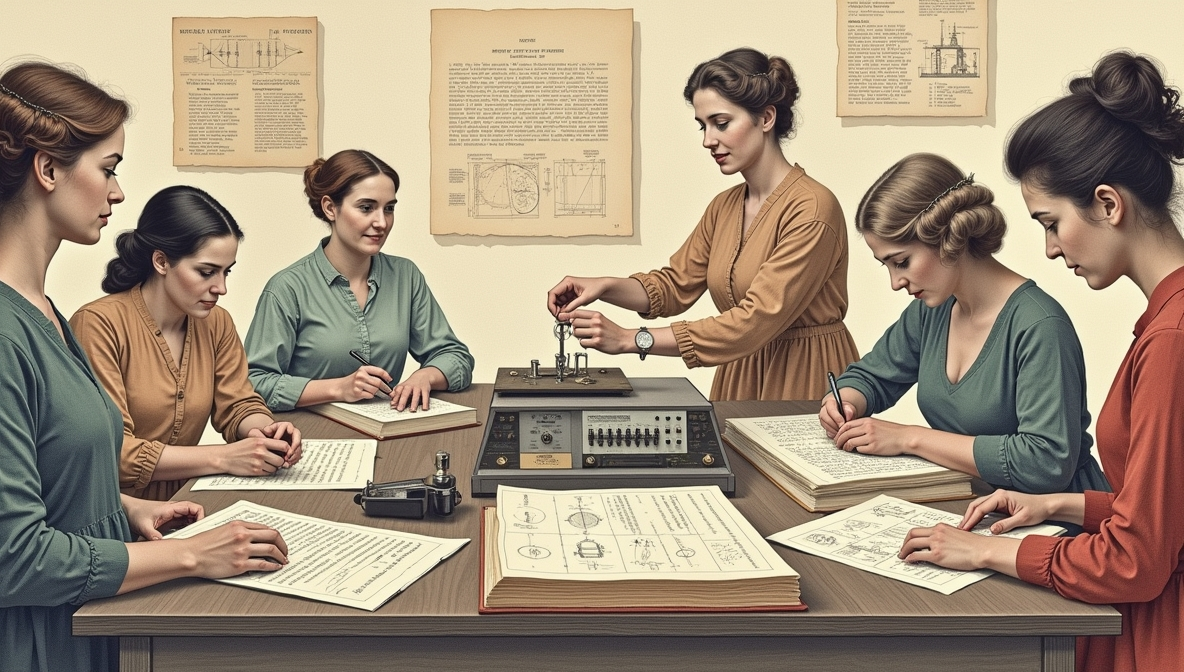
Women also played important, although frequently overlooked, roles in nineteenth-century intellectual life. Mary Somerville became one of Britain’s leading scientific writers, while Ada Lovelace demonstrated how mathematics and imaginative thinking could combine to envision possibilities far beyond the technology available in her lifetime.
Science, Innovation and Victorian Life
The relationship between Victorian Science and Society was sometimes inspiring and sometimes controversial. New theories challenged established assumptions, industrial technology created prosperity alongside difficult working conditions, and medical advances gradually changed attitudes towards disease and public sanitation.
This Walkeropedia category brings together biographies, discoveries, inventions and ideas from the Victorian era, explaining both the people behind scientific progress and the society in which they worked. From electricity and engineering to mathematics, computing, evolution and public health, Victorian Science and Society reveals how nineteenth-century curiosity helped create the foundations of the modern world.
The history of programming traces how abstract ideas about logic and procedure evolved into formal computer programming languages capable of directing machines. From early algorithmic thinking to modern symbolic systems, programming reflects changing ways humans have learned to describe, structure, and solve problems.
Victorian Science & Society explores how scientific ideas became woven into everyday life during the nineteenth century, shaping industry, belief, and public debate. As science moved beyond private study into institutions and culture, it transformed how knowledge was produced, shared, and understood.
19th-Century Science describes a period in which scientific inquiry became systematic, institutional, and closely linked to technological change. As experimentation, measurement, and professional standards took hold, science reshaped industry, education, and public understanding in ways that continue to influence modern research.
Logic and algorithms provide the foundation for structured reasoning, allowing complex problems to be broken down into clear, repeatable steps. By combining formal logic with defined procedures, these ideas underpin everything from early mathematical reasoning to modern computing systems.
Women in Science and Technology History examines how women have contributed to scientific knowledge, technological development, and mathematical understanding across centuries, often working through mentorship, collaboration, and informal networks. By placing these contributions within their social and institutional contexts, the article reveals how opportunity and recognition have shaped the scientific record as much as discovery itself.
Ada Lovelace was not simply the first programmer, but the first thinker to understand what computation could become. Working within Victorian science, she connected mathematics, logic, and imagination to reveal how machines might manipulate symbols, processes, and ideas — shaping the foundations of modern computing long before computers existed.