
JavaScript and HTML: 5 Powerful Ways They Work Together
Discover five powerful ways JavaScript and HTML work together to create interactive webpages, from responding to clicks and updating content to manipulating the DOM and validating forms.

Discover five powerful ways JavaScript and HTML work together to create interactive webpages, from responding to clicks and updating content to manipulating the DOM and validating forms.
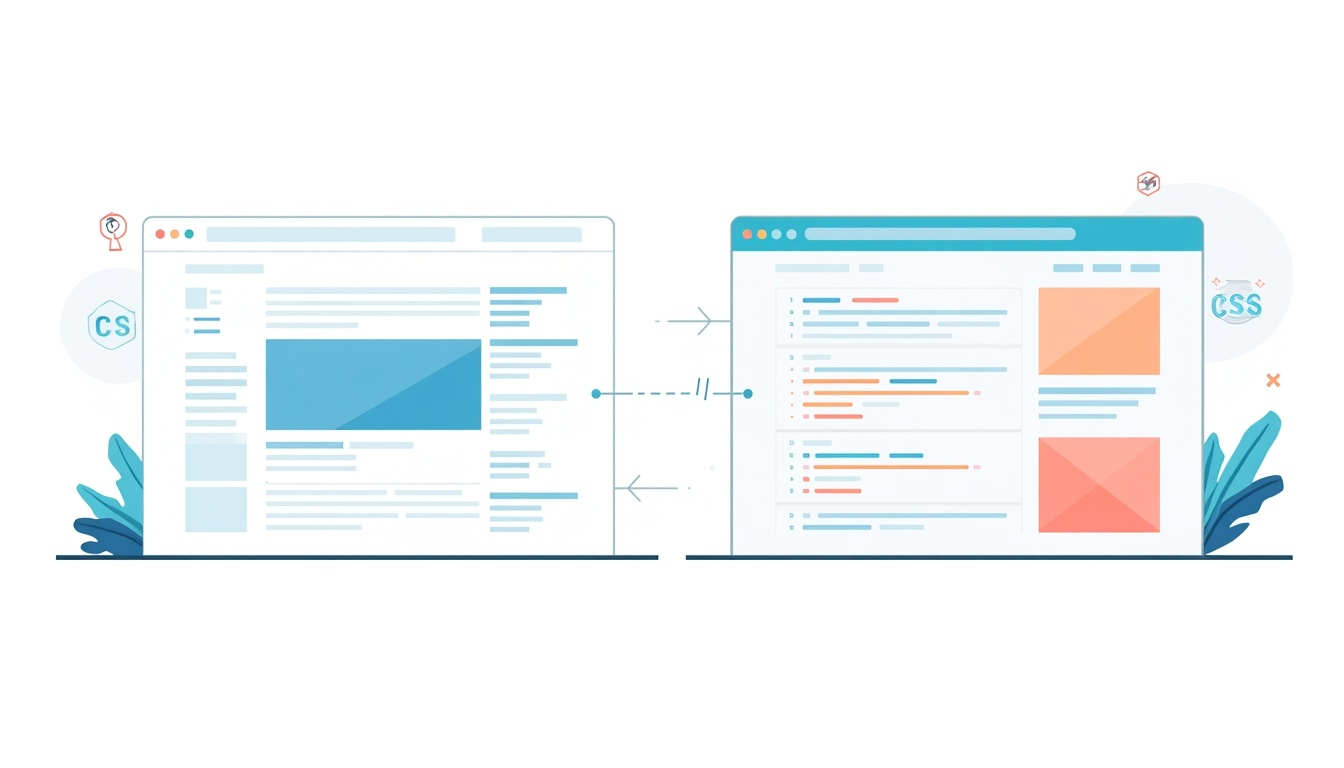
Explore the CSS and HTML difference, from HTML’s role in structuring webpage content to the way CSS controls its appearance, layout and responsive design.

Discover why HTML is a markup language rather than a programming language, how it structures webpages and how CSS and JavaScript add styling and interactivity.
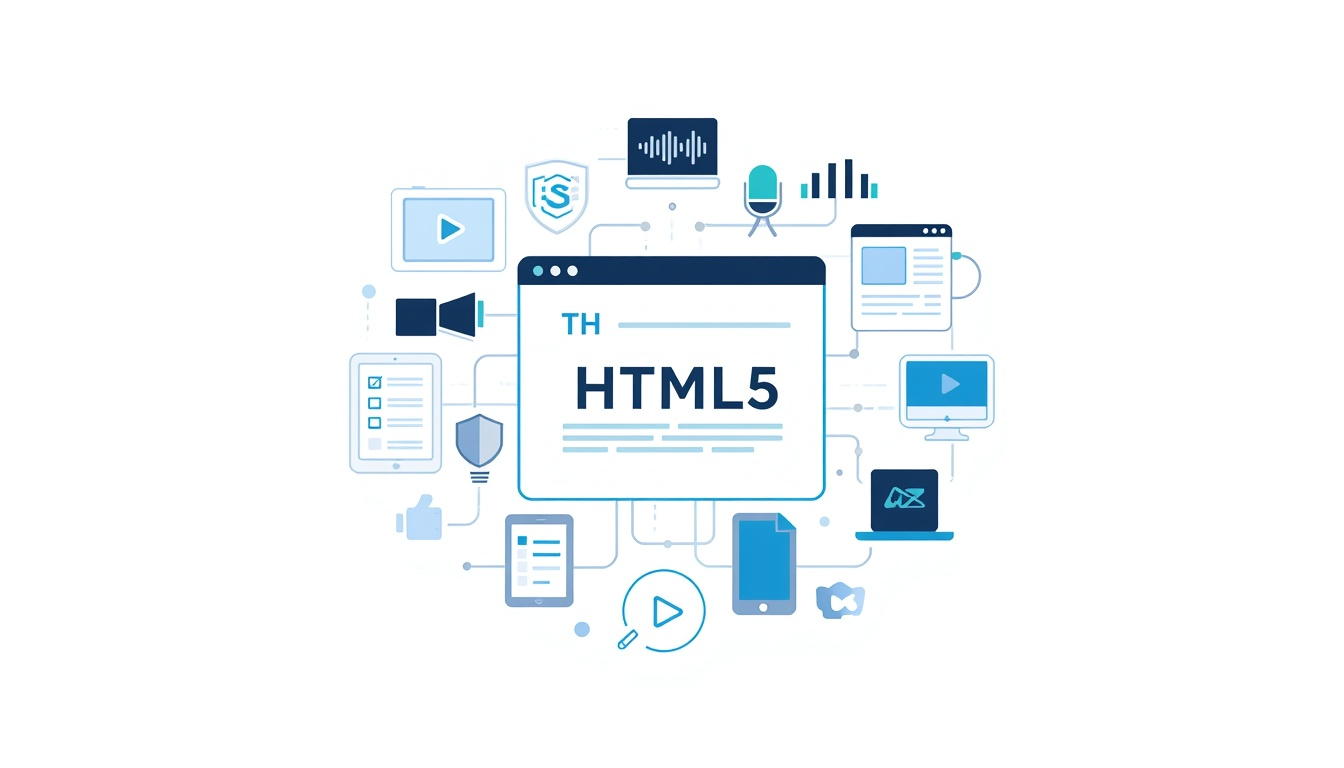
Explore the most important HTML5 features, from semantic page structure and native multimedia to improved forms and browser capabilities that helped shape the modern web.

Semantic HTML gives web content meaning as well as structure. Discover how elements such as
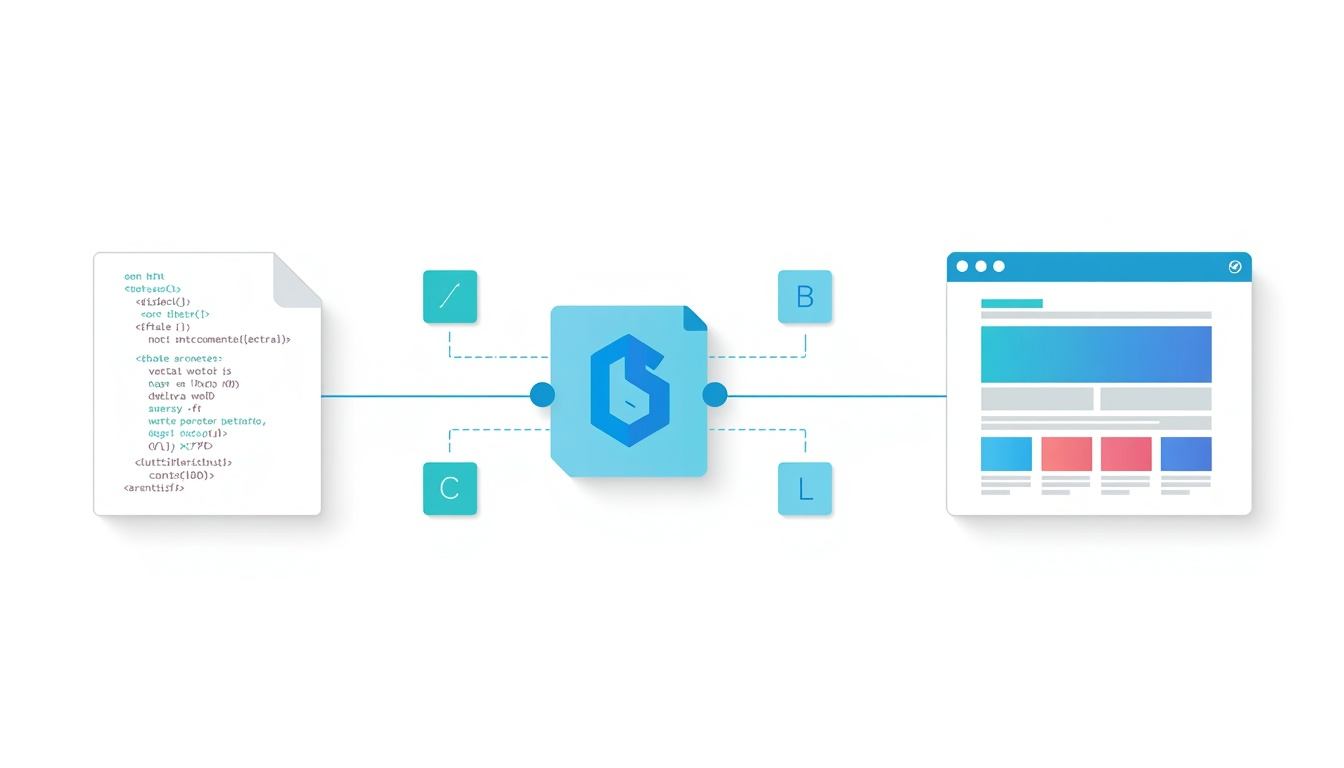
A clear look at how browsers read HTML, from parsing the original markup and building the DOM to applying CSS, calculating page layout and rendering the finished webpage on your screen.
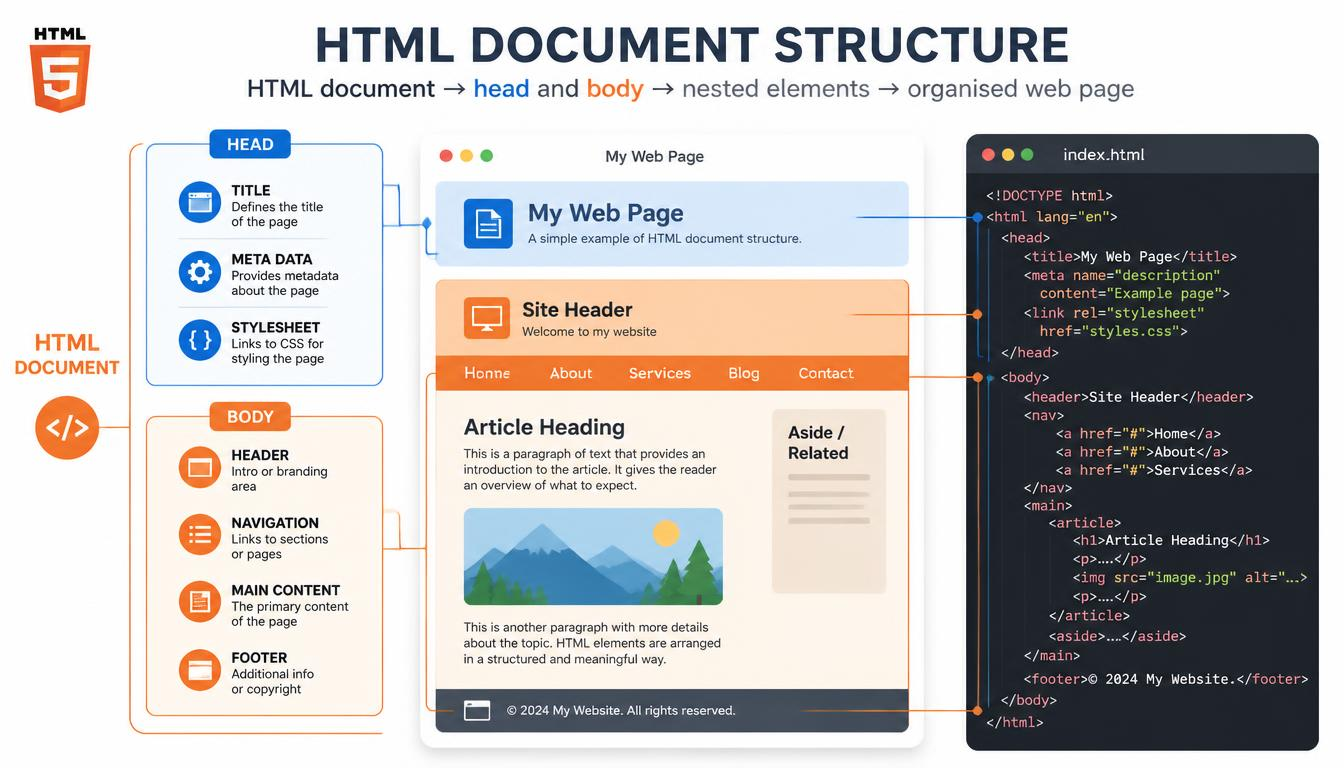
Learn how HTML document structure organises a web page using the DOCTYPE, head, body and nested elements, creating a clear framework that browsers can understand and display.
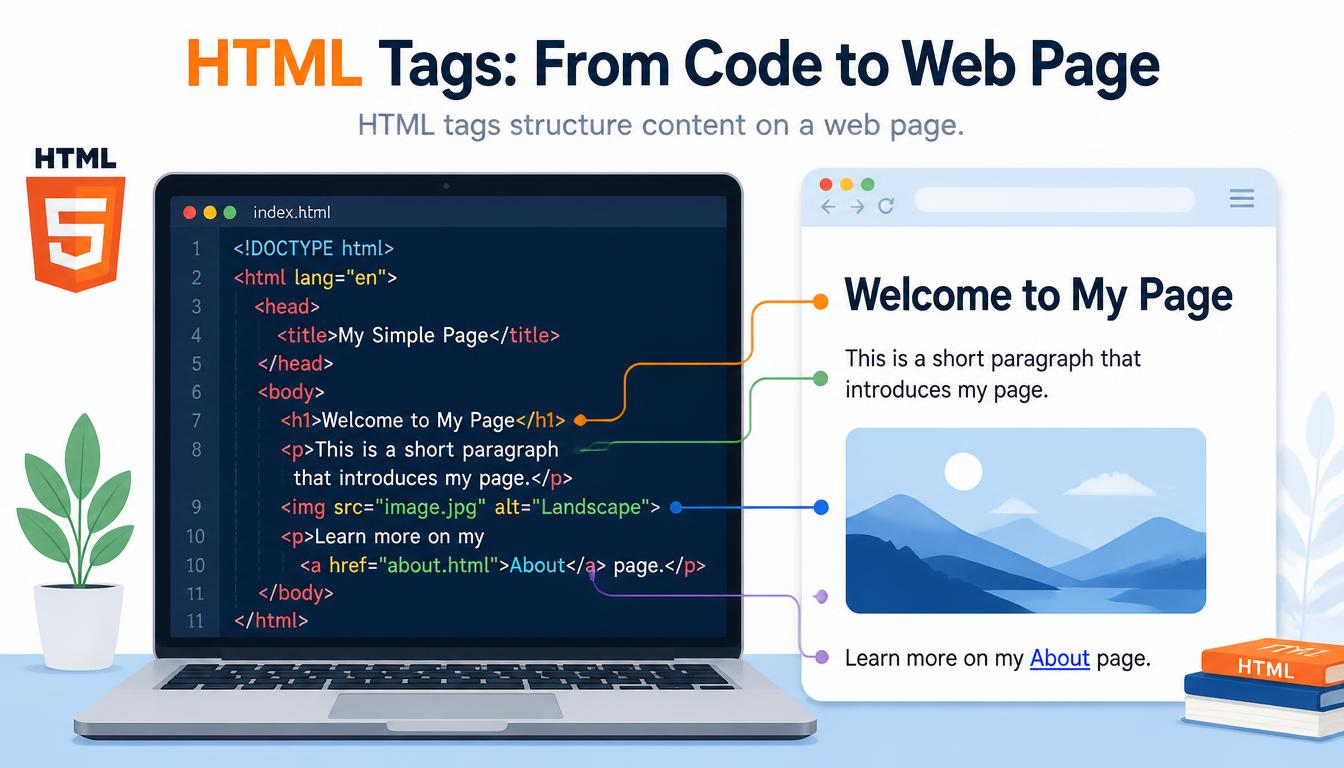
Learn how HTML tags give web pages structure and meaning, from headings and paragraphs to links and images, and discover how browsers turn simple HTML markup into organised web content.
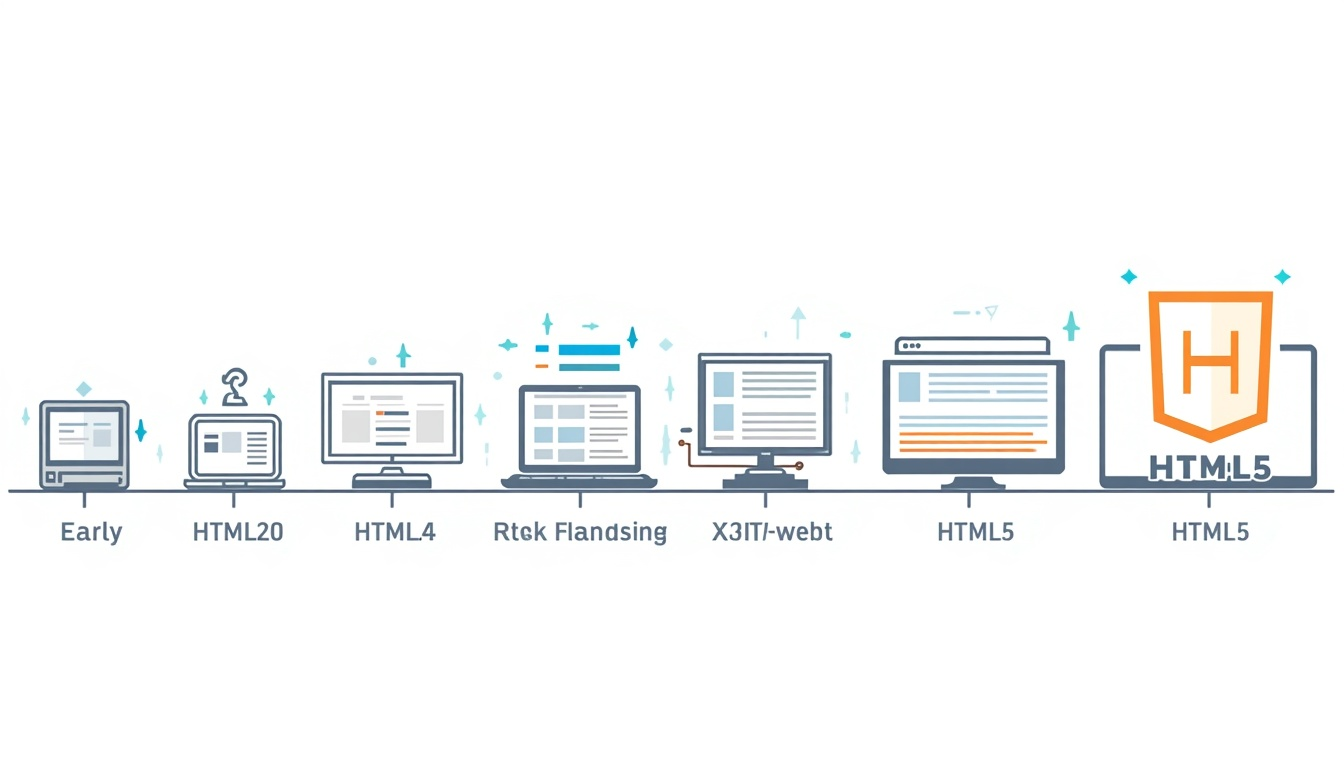
The story of HTML evolution is closely tied to the growth of the World Wide Web itself. What began as a simple way to organise and connect documents has developed…
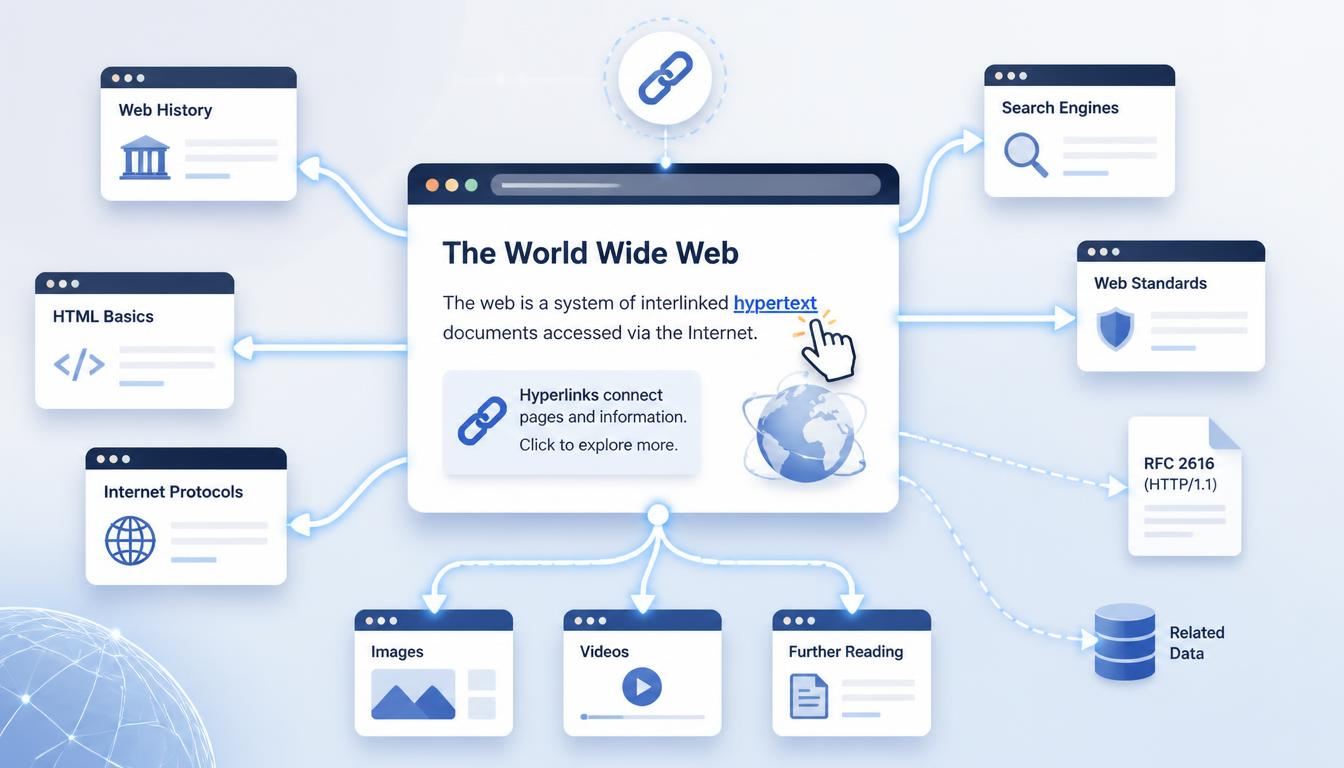
Discover what hypertext means, how hyperlinks connect information across the web and why non-linear navigation became one of the fundamental ideas behind the World Wide Web.