
Augustus de Morgan: 5 Brilliant Ideas That Advanced Logic

Augustus De Morgan was not a man of spectacle or invention, but of discipline and structure. In an age defined by engines, experiments, and discovery, he focused instead on ensuring that ideas behaved correctly. His work formalised the rules of logic, shaped Victorian mathematics, and quietly laid foundations that modern algorithms still rely on. Though often overlooked, De Morgan’s influence persists wherever reasoning must remain precise, consistent, and accountable.

Continue ReadingAugustus de Morgan: 5 Brilliant Ideas That Advanced Logic

Charles Babbage: 7 Remarkable Ideas That Changed Computing

Charles Babbage was a visionary mathematician and engineer whose unfinished machines laid the conceptual foundations of modern computing. Brilliant, exacting, and frequently at odds with his contemporaries, he imagined programmable calculation long before the technology existed to realise it.

Continue ReadingCharles Babbage: 7 Remarkable Ideas That Changed Computing

The Analytical Engine: 7 Powerful Ideas That Changed Computing

The Analytical Engine was a 19th-century concept that transformed the idea of calculation into something far more powerful: a programmable process governed by logic and instruction. Conceived by Charles Babbage and profoundly interpreted by Ada Lovelace, the engine anticipated many of the principles that define modern computing—long before the technology existed to build it.

Continue ReadingThe Analytical Engine: 7 Powerful Ideas That Changed Computing

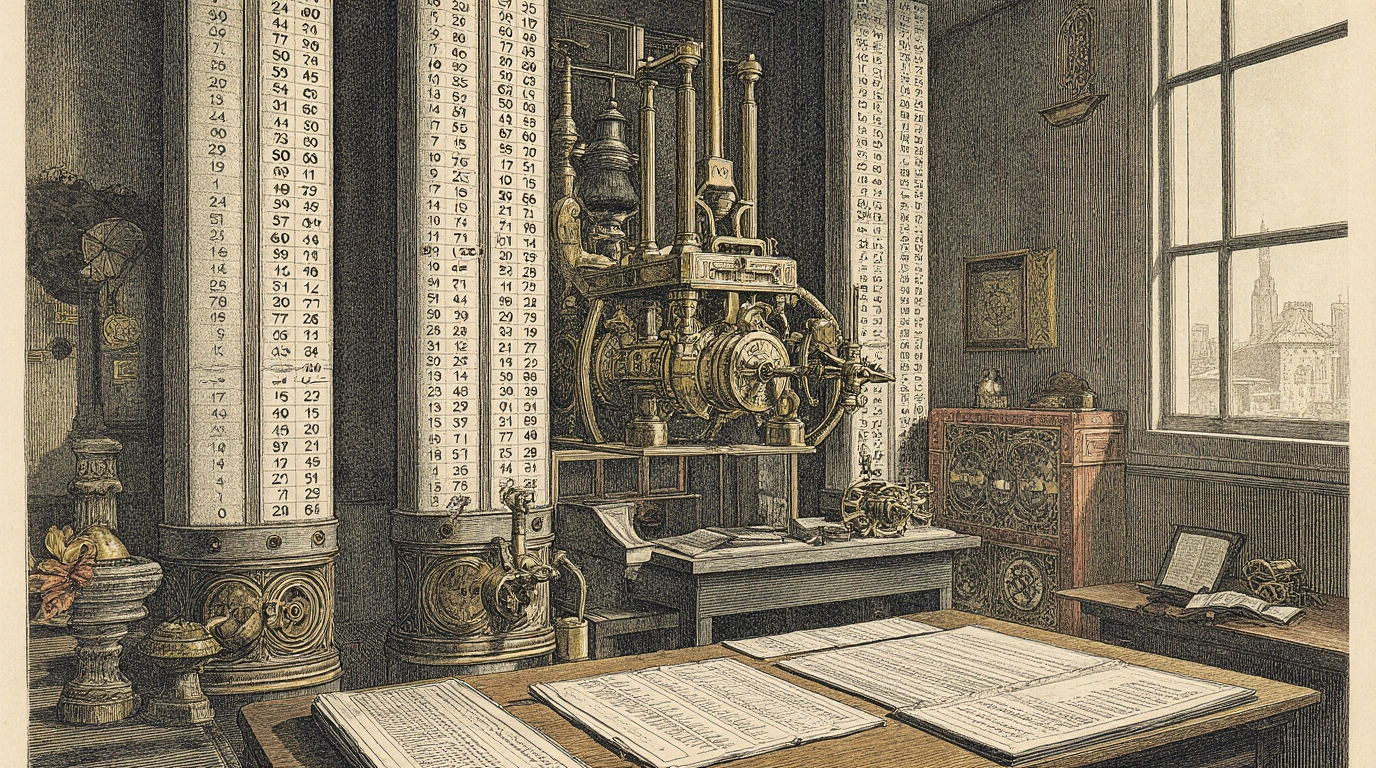
Difference Engine: 7 Remarkable Steps Toward Modern Computing

The Difference Engine was a 19th-century mechanical calculating machine designed to eliminate errors from mathematical tables by automating repetitive computation. Conceived by Charles Babbage, it demonstrated that precise calculation could be delegated to machinery, laying important groundwork for later developments in computing.

Continue ReadingDifference Engine: 7 Remarkable Steps Toward Modern Computing

Ada Programming Language: 7 Enduring Reasons It Still Matters Today

The Ada Programming Language was created to solve a problem most software never has to face: how to remain reliable for decades. Designed for safety-critical systems and named in honour of Ada Lovelace, Ada embodies a philosophy of precision, discipline, and long-term thinking that still matters today.

Continue ReadingAda Programming Language: 7 Enduring Reasons It Still Matters Today

Symbolic Processing: 5 Powerful Ideas That Shaped Intelligent Systems

Symbolic processing describes an approach to computation in which symbols are manipulated according to formal rules rather than treated as numerical values alone. By focusing on representation, logic, and meaning, symbolic processing laid essential foundations for programming, artificial intelligence, and the development of reasoning systems in computing.

Continue ReadingSymbolic Processing: 5 Powerful Ideas That Shaped Intelligent Systems

Early History of Programming: 7 Powerful Moments That Shaped Modern Code

The history of programming traces how abstract ideas about logic and procedure evolved into formal computer programming languages capable of directing machines. From early algorithmic thinking to modern symbolic systems, programming reflects changing ways humans have learned to describe, structure, and solve problems.

Continue ReadingEarly History of Programming: 7 Powerful Moments That Shaped Modern Code

Ada Lovelace: 7 Remarkable Reasons Her Legacy Still Inspires

Ada Lovelace was not simply the first programmer, but the first thinker to understand what computation could become. Working within Victorian science, she connected mathematics, logic, and imagination to reveal how machines might manipulate symbols, processes, and ideas — shaping the foundations of modern computing long before computers existed.

Continue ReadingAda Lovelace: 7 Remarkable Reasons Her Legacy Still Inspires